What We Built
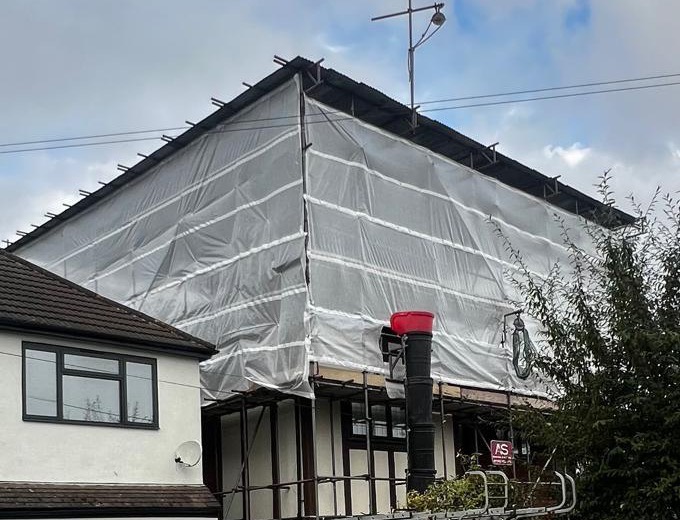
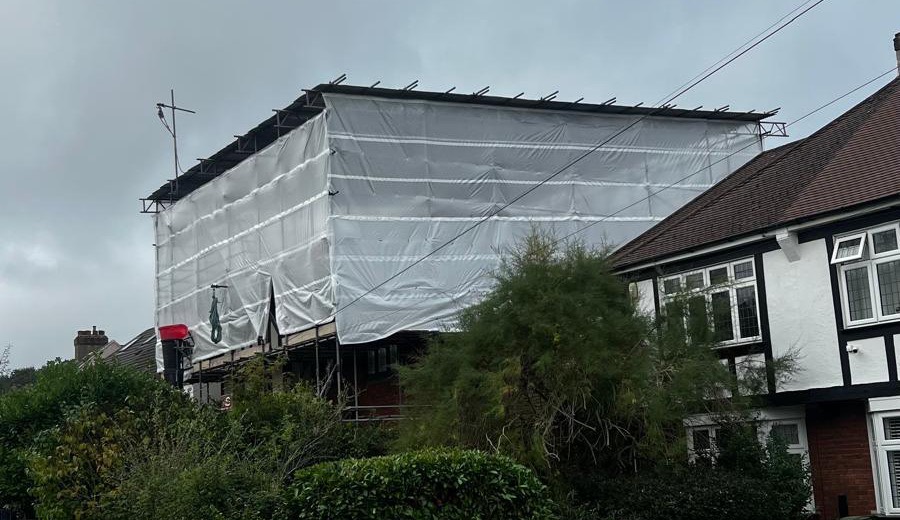
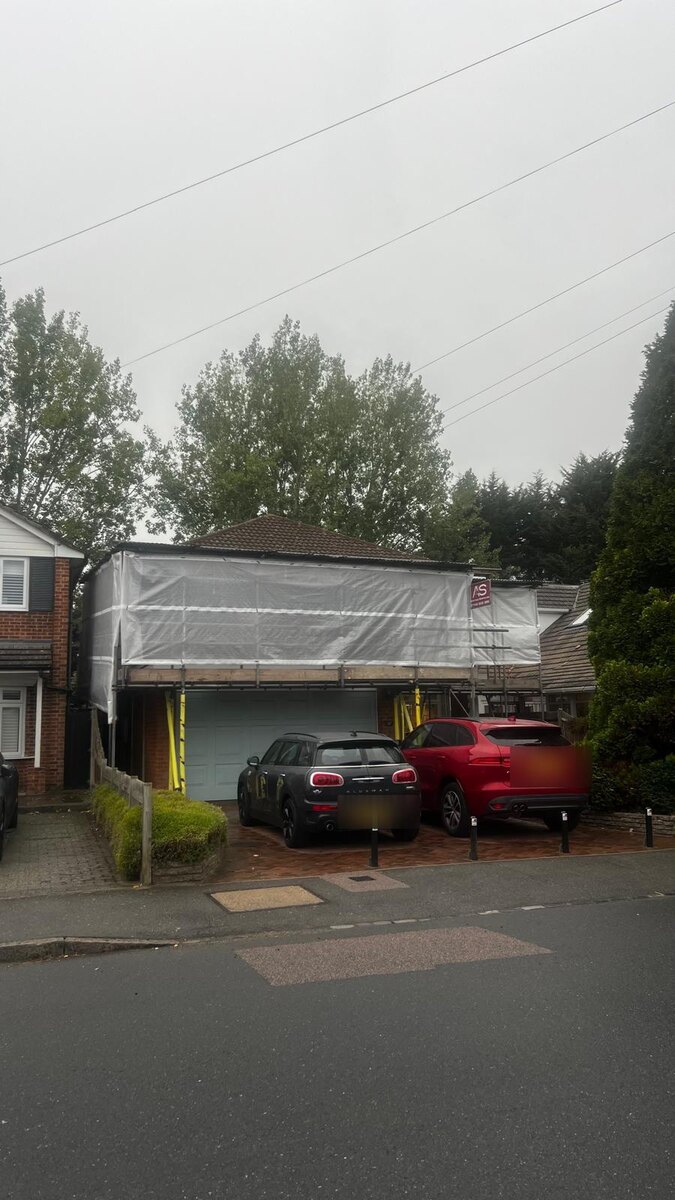
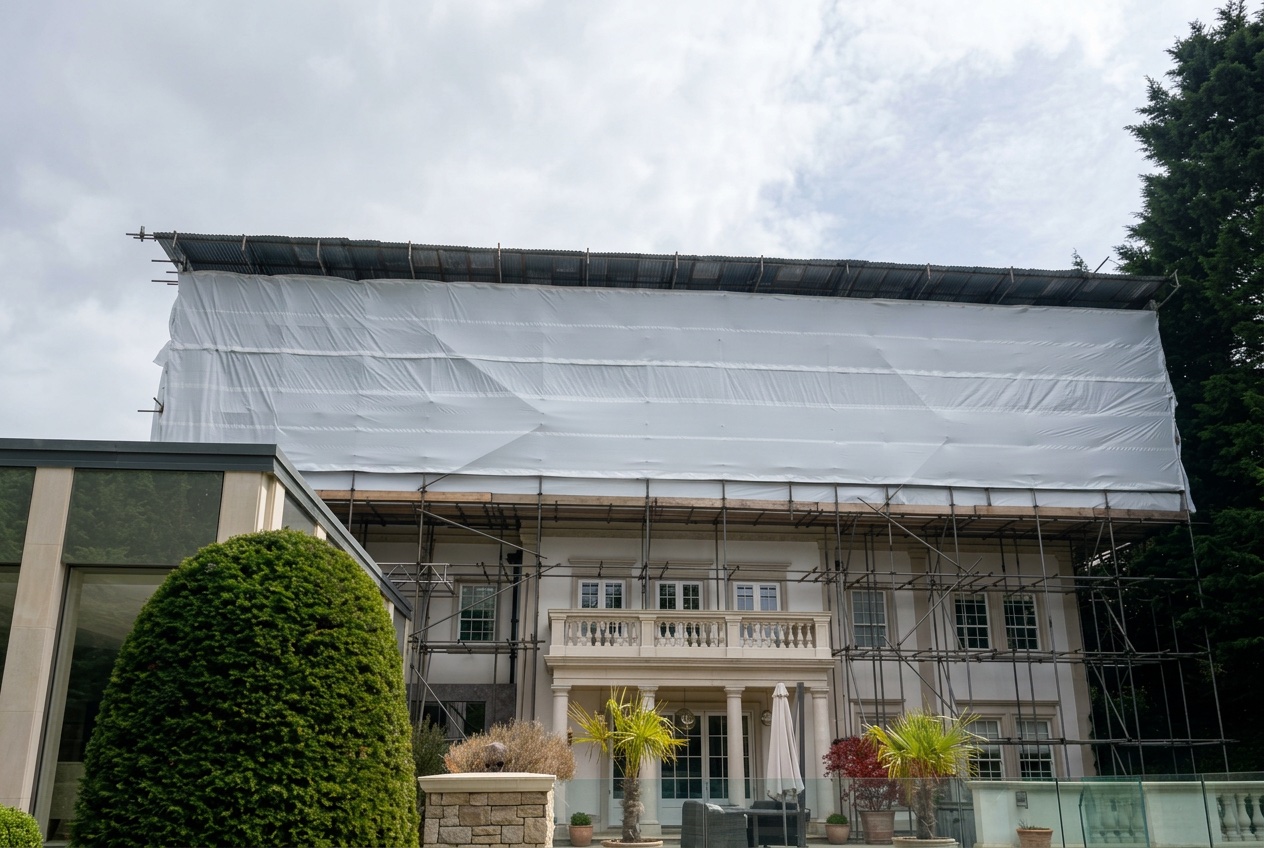
The short version. Spray foam removal on a detached house in Hayes. The scaffold does three jobs at once. It carries a temporary roof so the place stays dry while the covering is off, it is sheeted so nothing blows into the gardens either side, and it carries a chute so the waste comes down the outside rather than through somebody's landing.
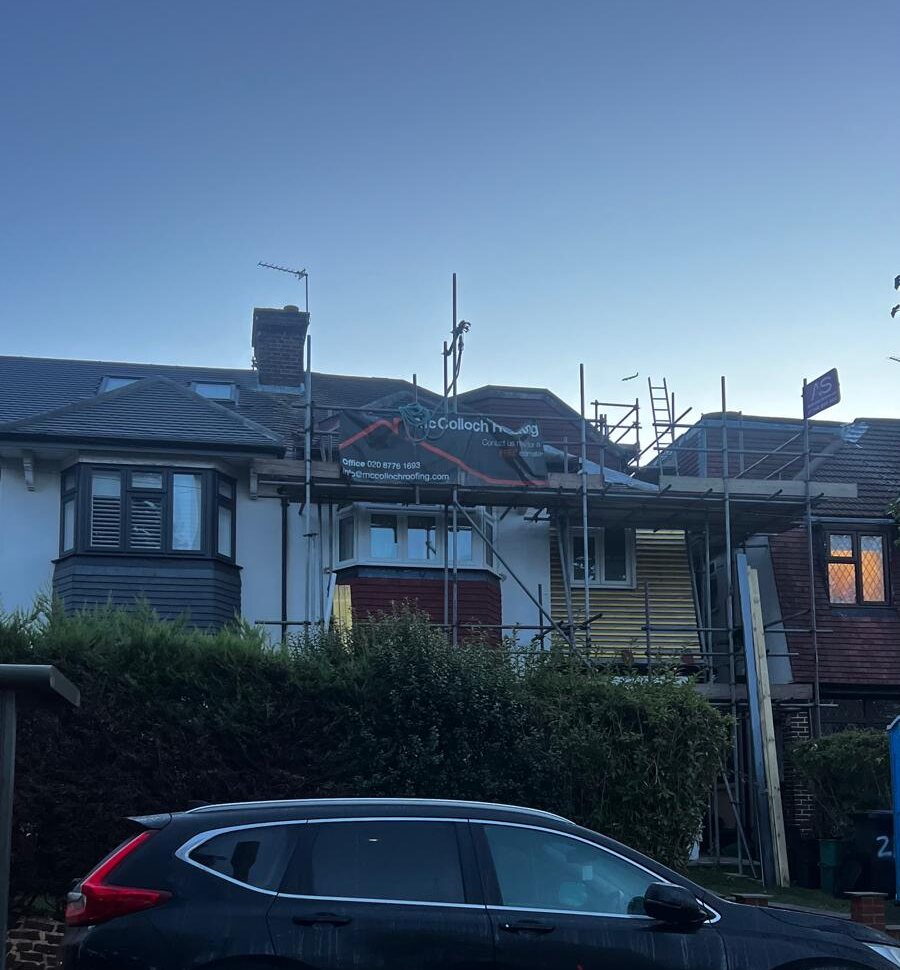
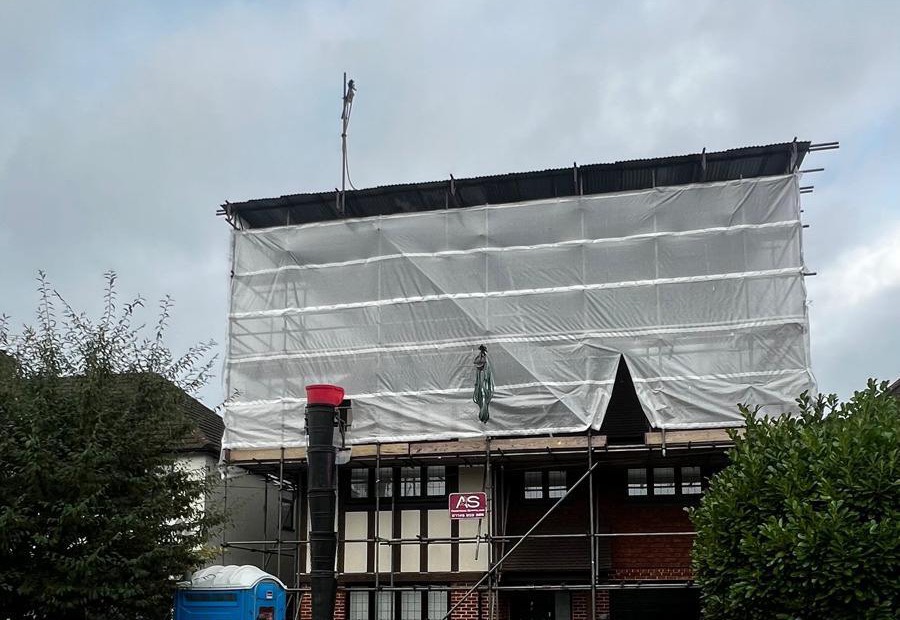
Scaffold to the elevations carrying a pitched temporary roof in corrugated sheet. It spans the full width of the building and oversails it on both sides, so water runs off clear of the walls rather than down them. It is a roof in its own right, not a cover thrown over the top.
Below it the elevation is sheeted from the temporary roof down past the eaves, so the whole thing reads as a box with the house inside it.
A debris chute runs from scaffold level to the ground down one side, with a red hopper at the top where the material goes in. The house sits behind gates with neighbours close on both sides and mature planting between, and everything stands within the boundary.
Why This Is a Temporary Roof Job
Most roof work is weather dependent. This is weather exposed, which is a different thing.
Spray foam was applied to the underside of the roof. The question everybody asks is why it cannot simply be cut out from inside the loft, and the answer is the membrane. Where foam has been sprayed straight onto the breathable membrane or the felt, taking the foam off usually takes the membrane with it. Once that has gone the roof has no secondary barrier, so the tiles come off from above, the membrane is replaced, and the roof is re-covered.
That is the moment the job stops being a loft job and becomes a roof job. The building is not briefly uncovered while a trade gets on with it. It is open for the duration.
A temporary roof removes that risk entirely. The house stays dry whatever the week does, the trade works to a programme rather than a forecast, and nobody is racing a front coming in on a Friday afternoon with half a roof off.