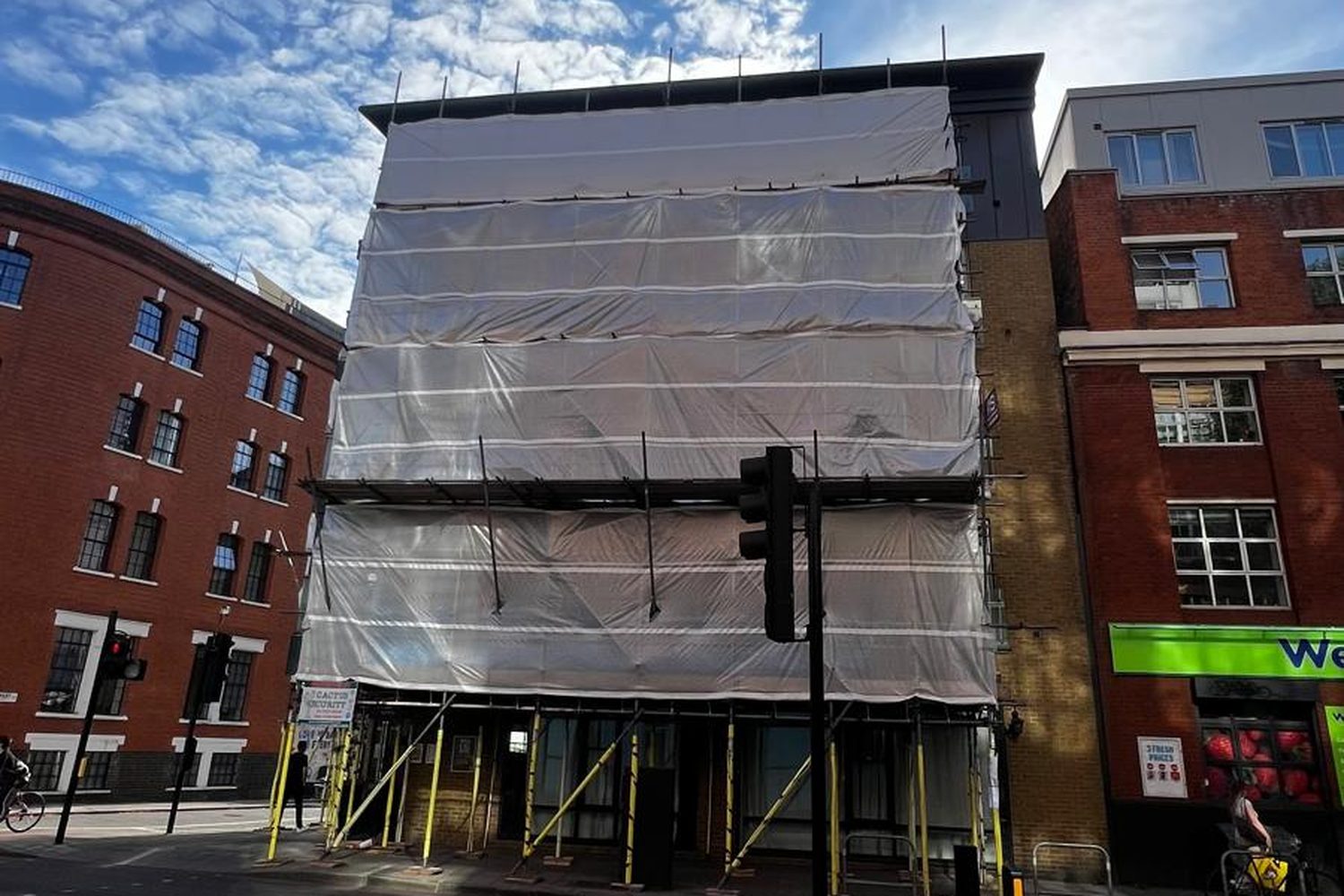
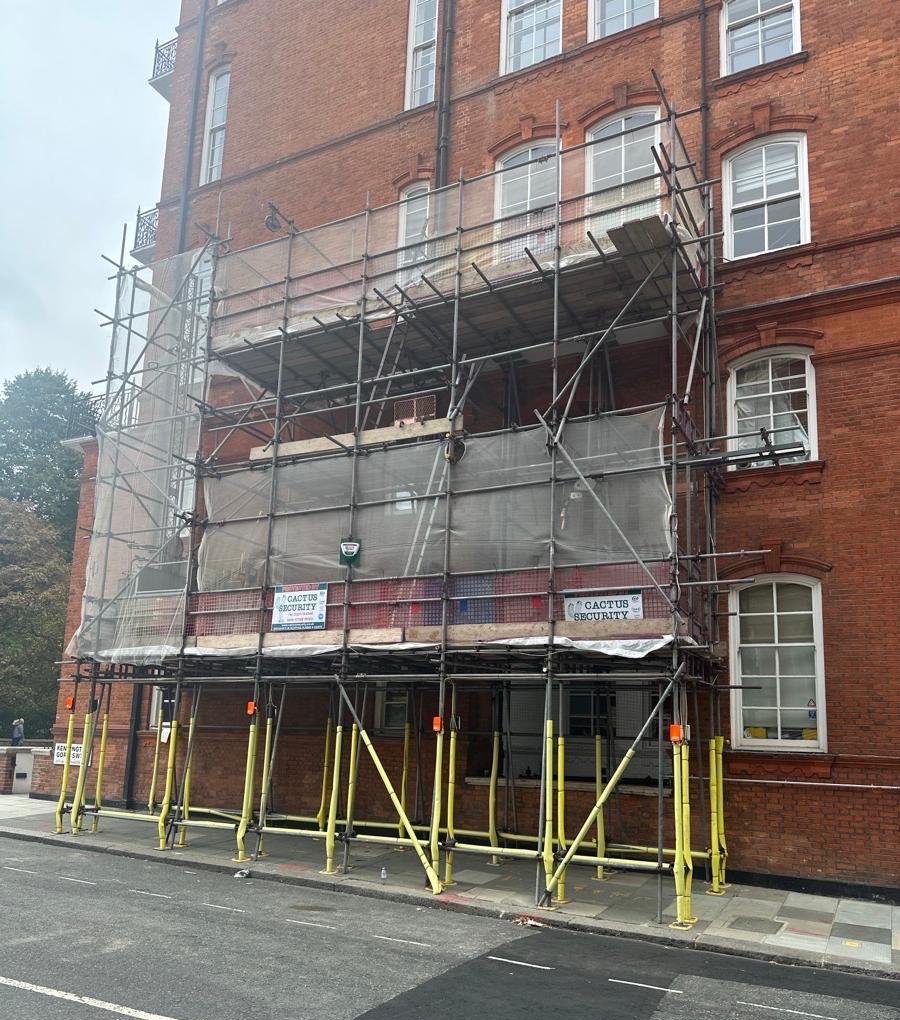
Armstrong Scaffolding pavement gantry on hi-vis yellow standards with sheeted lifts and gin wheel hoist access at Albert Hall Mansions, Kensington Gore
Featured Project

Gantry and Hoist Access Through a Listed Mansion Block

Kensington Gore, SW7Grade II ListedHoist Access

A pavement gantry and two gin wheels, so a refurbishment could work through flat after flat without carrying any of it down a Victorian service staircase.

Location
Kensington Gore, London SW7
Sector
Residential refurbishment programme
Service
Pavement Gantry & Hoist Access
Site Type
Grade II listed mansion block
Armstrong Scaffolding pavement gantry on hi-vis yellow standards with sheeted lifts and gin wheel hoist access at Albert Hall Mansions, Kensington Gore
Gantry on hi-vis standards across the footway, sheeted lifts above, and the gin wheel positions that kept the strip-out off the stairs.
The Constraint

There Is a Back Staircase, and That Is the Problem

Mansion blocks of this age were planned with two ways up. A main stair for the residents, and a service stair beside it for deliveries and staff. It was sensible planning at the time, and on a listed building it is protected fabric now.

What has changed is the load. A stair built for porters and deliveries is not built for a bath, a kitchen and a skip's worth of plaster, and the people on the other floors are at home while you carry it past them. Do that once and it is an inconvenience. Do it flat after flat for months and it is a dispute.

So the materials did not use the stairs at all. They went out of the window.

Hoist Access

Fifty Kilos at a Time

There are two gin wheels on this scaffold. One on the upper lift, one lower down.

A gin wheel is a pulley on a projecting tube, braced back into the scaffold, with a rope through it. It is the oldest lifting method in the trade and on a job like this it is still the right one. It is also strictly limited, and the figures below are industry guidance rather than a rule of thumb.

Load limit
50kg
What industry guidance allows a gin wheel to hoist
Maximum reach
750mm
How far the wheel may hang from the outer standard

That limit is the point rather than a drawback. A refurbishment does not need to move a bath in one piece if it can move everything else steadily, all day, week after week, without a single load crossing a communal floor. Rubble goes down in manageable loads. Materials go up the same way.

Two positions rather than one is the detail that matters. It puts the lifting point at the level the work is actually on, so nothing is dragged up or down the scaffold by hand before it can be lowered. A single gin wheel at the top looks like hoist access on a drawing. Two at working level is hoist access that gets used.

Refurbishing flats in an occupied block?

We will work out how the materials get in and out before anyone quotes the scaffold.

What We Built

A gantry across the pavement carried on standards set along the kerb line, finished in high visibility yellow with warning lamps, so it is obvious to anyone walking past after dark.

Two working lifts above the gantry deck, sheeted rather than only netted, so a strip-out does not put dust across a public footway or through the open windows of the flats either side.

Brick guards along the gantry fascia and a first aid box fixed where the crew can reach it.

And no more scaffold than the phase needed. The structure covers one section of the elevation and stops a long way below the roof, because a programme working through the building does not need the whole frontage wrapped at once. Sheeting the lot would have been simpler to draw and considerably worse for everyone living behind it.

A Façade You Do Not Drill Into Casually

Albert Hall Mansions is Grade II listed. The red brick is a large part of why, and every fixing into it is a permanent mark on a protected building.

That changes how the scaffold is designed rather than whether it can be built. The gantry carries the load from the pavement, the structure is braced to stand on its own account, and ties into the façade are kept to what is genuinely needed and agreed rather than what is quickest. A scaffold that comes down and leaves a grid of patched holes across a listed elevation has cost the client a repair bill and a conversation with the conservation officer.

The Pavement Is Public and the Road Does Not Stop

Kensington Gore runs past the Royal Albert Hall and carries traffic, buses and a constant flow of people on foot.

That makes the gantry a licensed structure on a public highway, not a site decision. It has to leave a clear route underneath, stay lit, and stand hard against a live carriageway with no lane closure protecting it. The yellow finish and the lamps are not decoration. They are what stops somebody walking into a steel tube in the dark outside one of the busiest venues in London.

If you have works coming up in an occupied block, we can look at the access with you before the programme is set.

Kensington is central London. Most of our work sits closer to home, across Kent and the South East London boroughs, where we run the same gantries, hoist access and commercial scaffolding from our Sevenoaks yard.
Common Questions

Hoisting and Listed Buildings

How do you refurbish flats in an occupied block without wrecking the communal parts?

Everything goes through the window and down the outside. A gin wheel on the scaffold gives a controlled lifting point at the level the work is on, so waste comes down and materials go up without anything heavy crossing a shared hall, stair or lift. Over a programme running flat after flat that is thousands of trips the communal parts never see, and it is usually the difference between a job the residents tolerate and one they complain about.

What is a gin wheel, and is it still allowed?

A gin wheel is a pulley fixed to a projecting scaffold tube with a rope running through it, used for raising and lowering loads by hand. It is still standard equipment and it is governed rather than banned. Industry guidance puts the load at no more than 50kg, with the wheel hung no more than 750mm from the outer standard so the scaffold is not loaded eccentrically. Anything heavier than that needs a different lifting method.

Can you scaffold a listed building?

Yes, and it is routine, but the design changes. Fixings into listed brick, stone or terracotta are permanent marks on protected fabric, so the structure is planned to carry its load independently and to keep ties to what is genuinely necessary and agreed. The aim is a façade handed back as it was found rather than one that needs making good.

Do you need a licence for a gantry over a pavement?

Yes, and a gantry is assessed differently from a standard footway scaffold, because it carries the structure over the public route rather than standing beside it. Expect the conditions to specify the headroom and the clear width held underneath, how the deck is lit and marked, and what loading it may carry. Where a street serves a major venue, delivery and working hours can be restricted as well, so it is worth applying early.

Got a listed building or an occupied block?

Tell us what is above and we will tell you what the access needs to be.

Get in Touch

Need Hoist Access on Your Next Job?

Gantries, gin wheels and hoist towers on occupied and listed buildings. Armstrong Scaffolding issues a CAD drawing and a fixed quote before we mobilise, across Kent, London and the South East.

Contact Us for a FREE Quote