What We Built
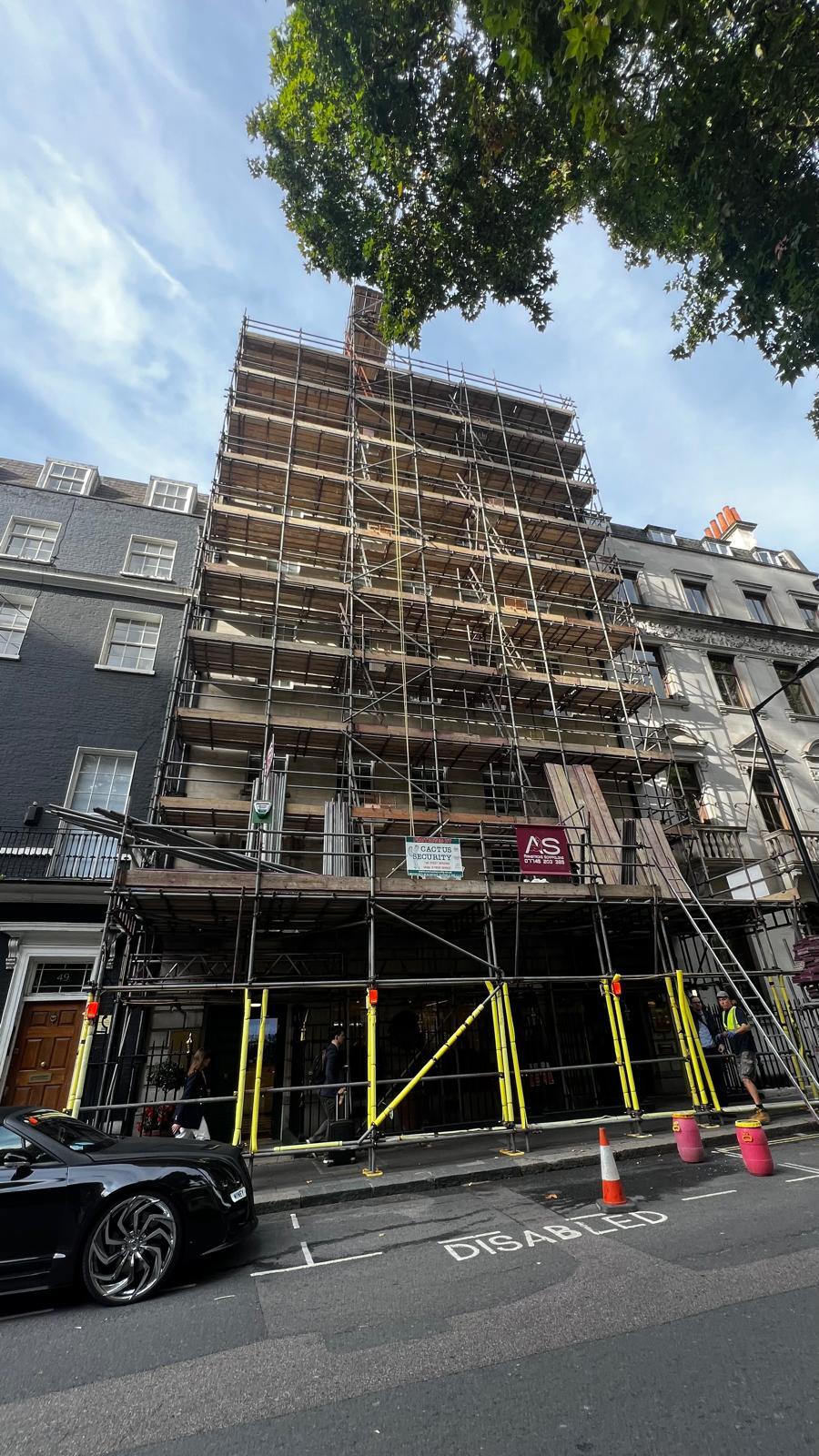
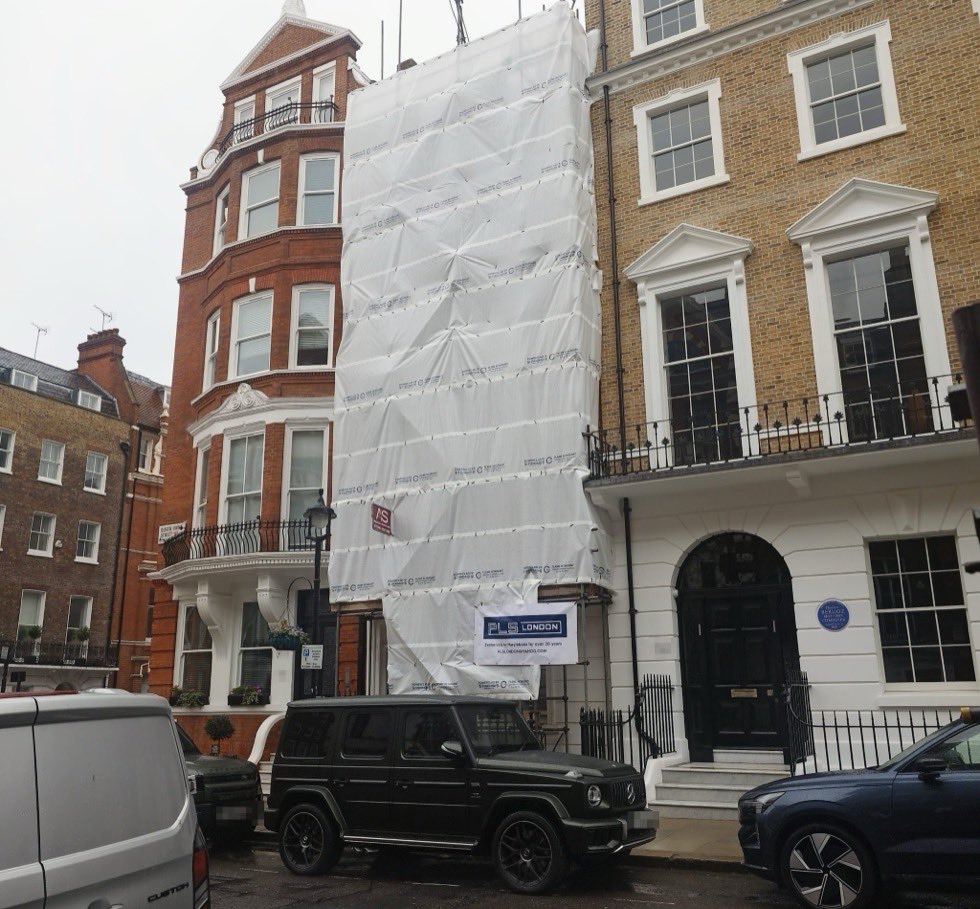
The short version. A refurbishment on a narrow Marylebone townhouse for PLS London, scaffolded full height and sheeted top to bottom in certified flame retardant material. Two things make it a different job from the same scaffold in a Kent cul de sac. The building is joined to its neighbours on both sides, one of which is listed. And there is nowhere to put anything, because the kerb is resident permit bays on both sides of the street.
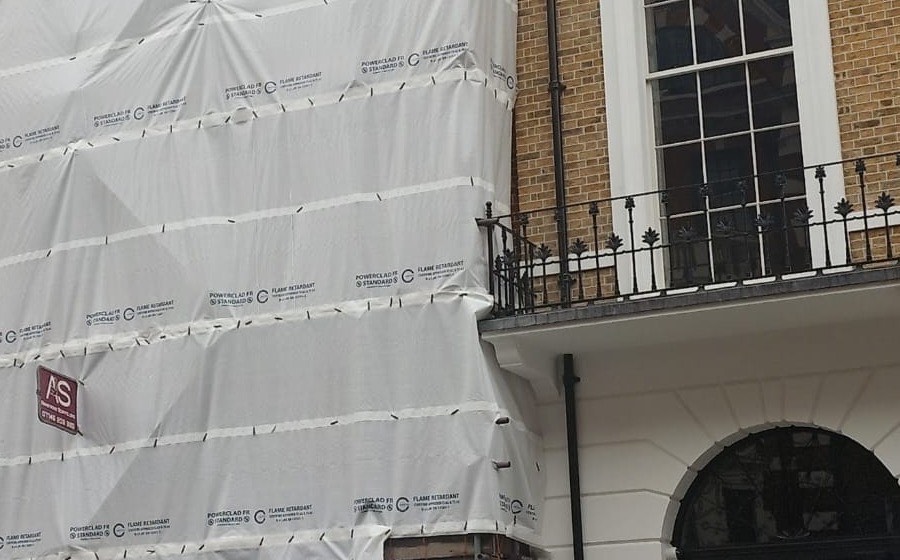
The frontage is narrow and the neighbouring buildings sit hard up against it on both sides. The scaffold rises within that width rather than spreading, and every tie and every return is set out against a boundary rather than open ground. A cast iron downpipe runs in the gap between the scaffold and the house next door, which is a fair measure of how much room there was to play with.
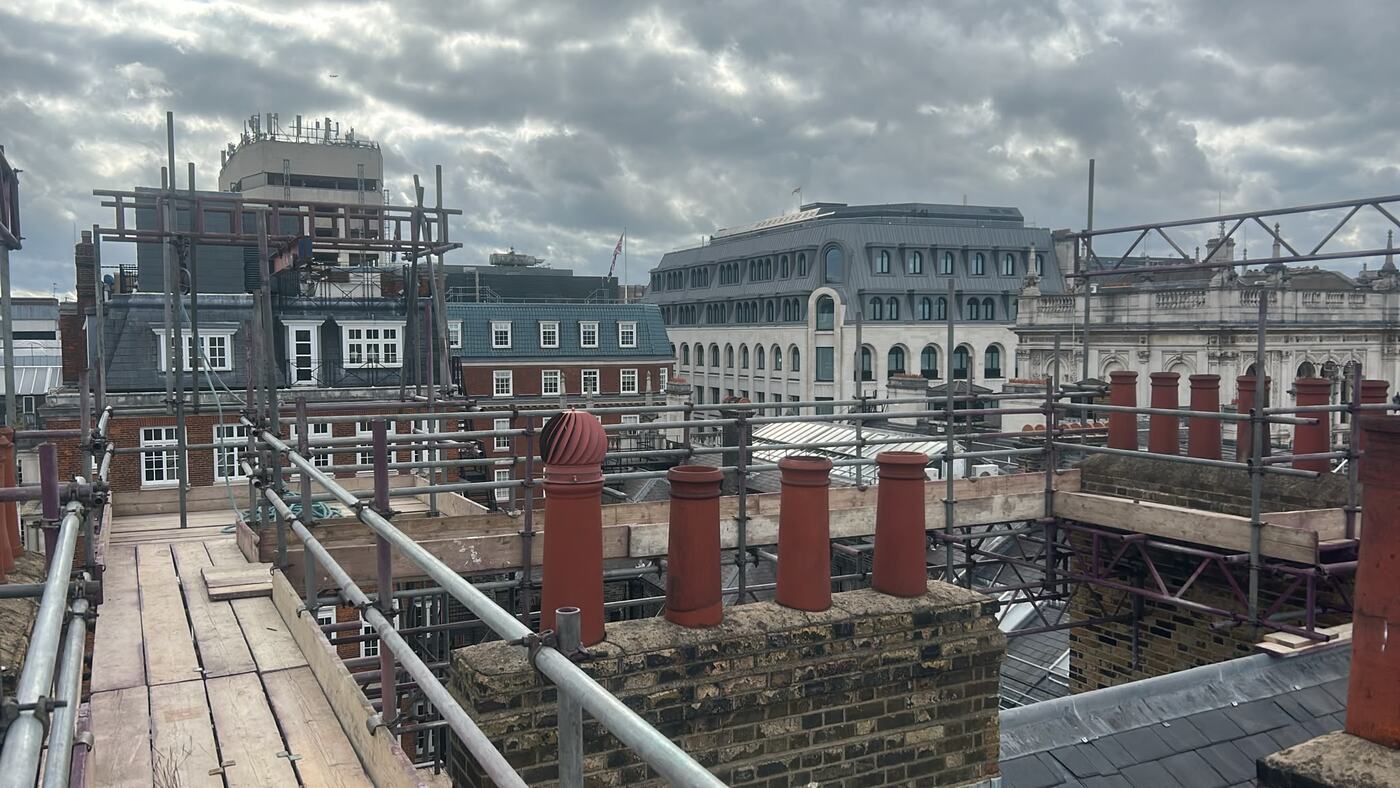
It carries on past the eaves and wraps over the top, so the sheeted face runs from street level to above the roofline and returns around the corner rather than stopping at the front.
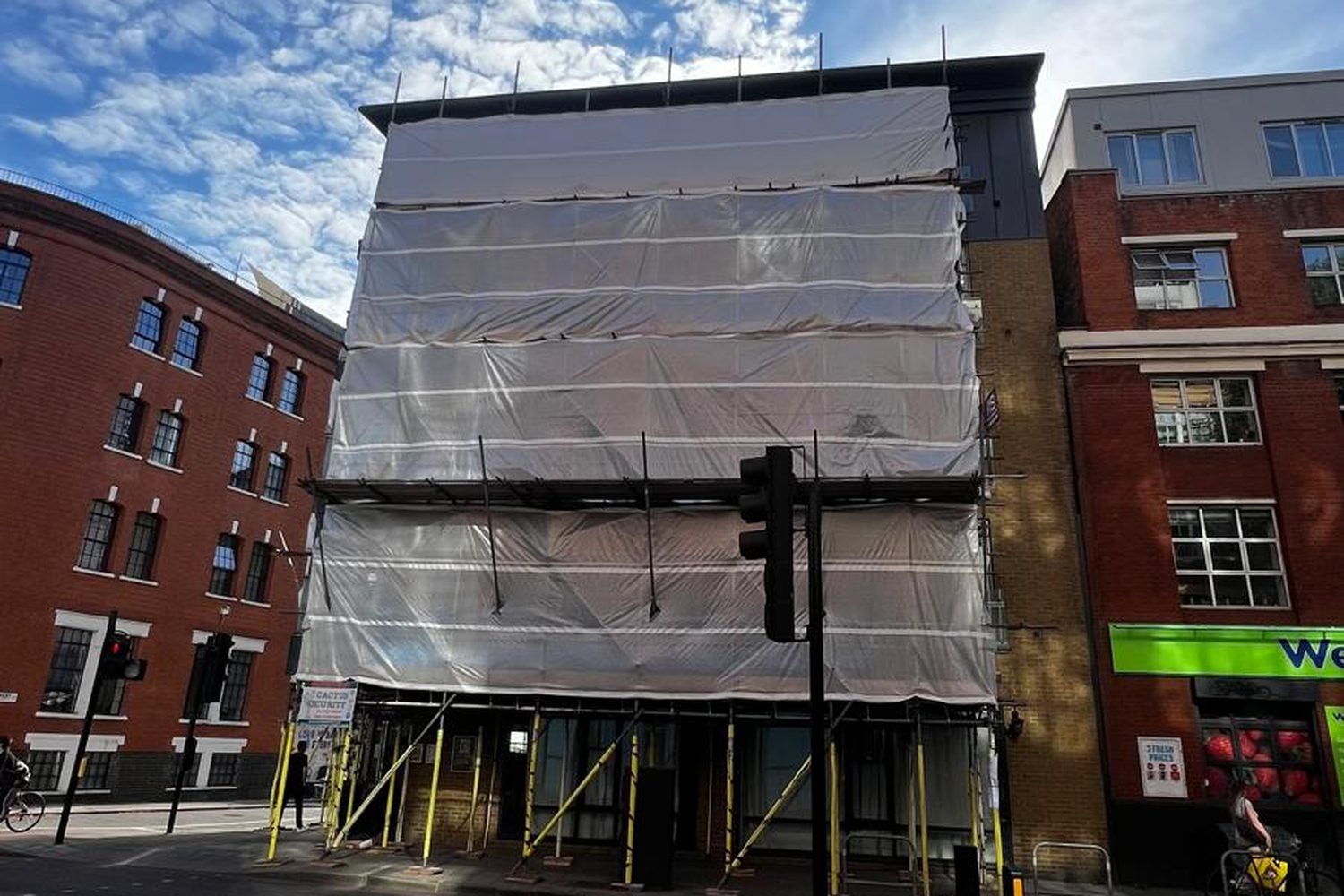
The sheeting runs the full height in horizontal bands, lapped and clipped to the standards, with the flame retardant marking repeating across every band.
Why the Sheeting Is the Story
Most people see white sheeting and read weather protection. On a job like this it is doing something else as well.
Sheeting a scaffold turns an open frame into an enclosed surface, and an enclosed surface on a building fire is a route. The guidance that governs this is specific about it. The HSE publication on fire safety in construction, HSG168, says that where scaffolding forms part of a means of escape the sheeting must be to a flame retardant standard, and recommends flame retardant sheeting on occupied buildings and on structures with exposed timber. The Joint Code of Practice asks that flexible materials used to clad scaffolding meet LPS 1215 or an equivalent, and that the approval mark is printed on the material.
That last part is the bit worth knowing as a client. Sheeting that claims to be fire retardant and sheeting that carries a printed approval mark are not the same thing, and only one of them can be checked by looking at it. The sheeting on this job carries its mark across every band of the elevation.
On a Georgian terrace in central London, with people living and working either side and a listed building sharing a wall, that is not box ticking. It is the difference between a scaffold that is part of the fire strategy and one that is a problem in it.