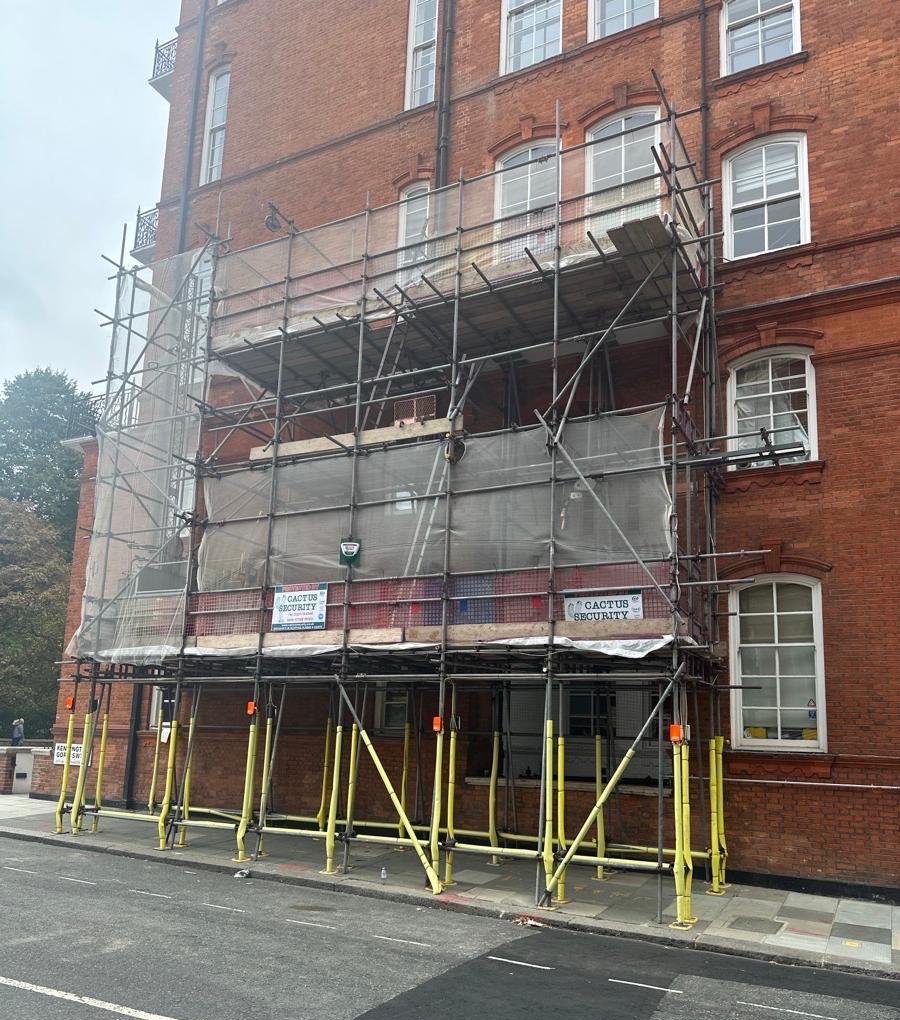
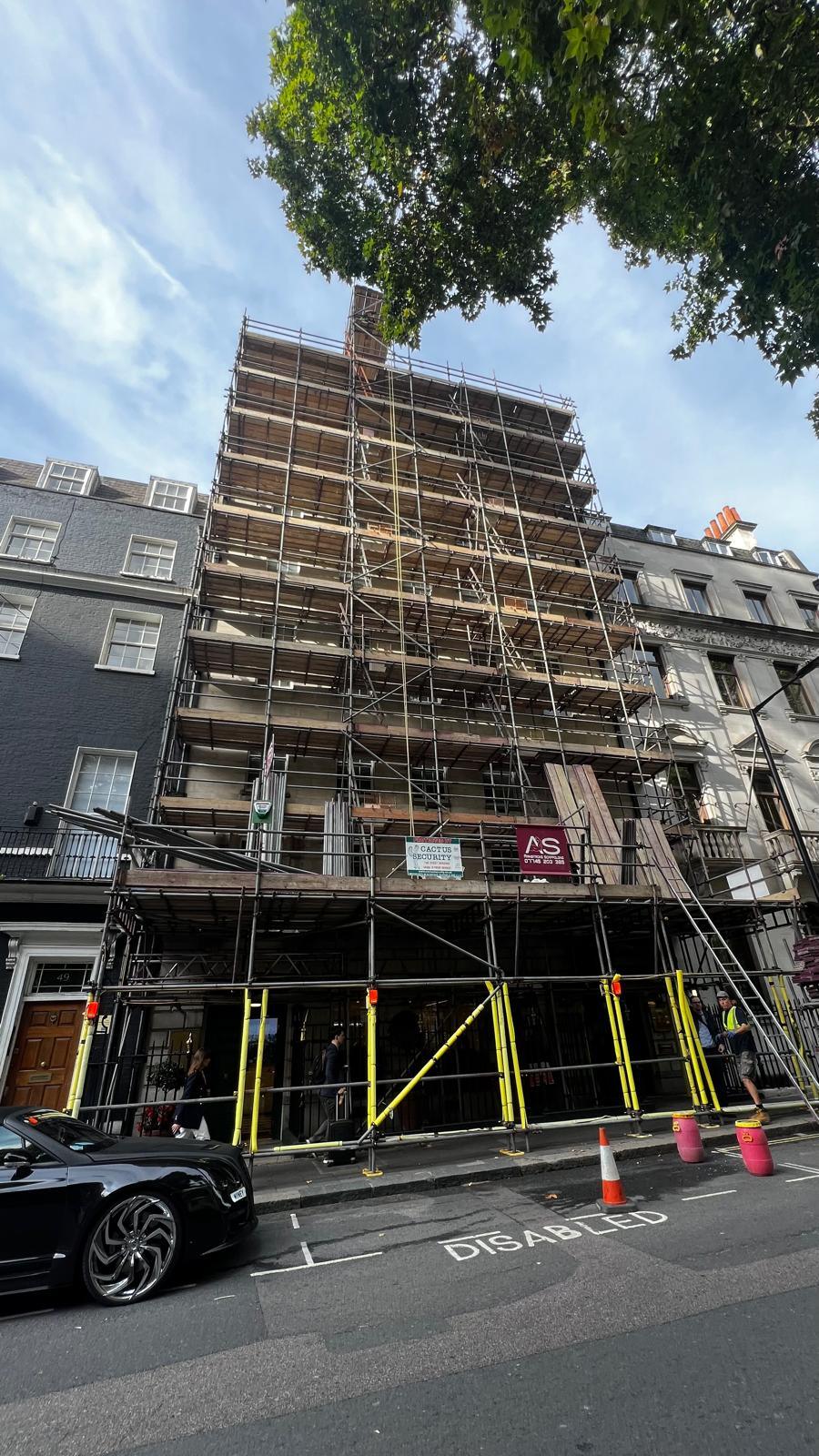
Armstrong Scaffolding designed scaffold structure rising the full height of a period terrace on Berkeley Square, Mayfair, with a boarded pedestrian gantry over the footway
Featured Project

A Designed Scaffold Structure on Berkeley Square

Berkeley Square, W1Designed ScaffoldPedestrian Gantry

A bespoke designed structure to a period terrace in Mayfair. Front, rear and roof level access, an electric hoist over the rooftops, full encapsulation, and the public footway open underneath throughout.

Location
Berkeley Square, Mayfair, W1
Sector
Period Building Refurbishment
Service
Designed Scaffolding & Safe Access
Site Type
Occupied terrace on a live Mayfair street
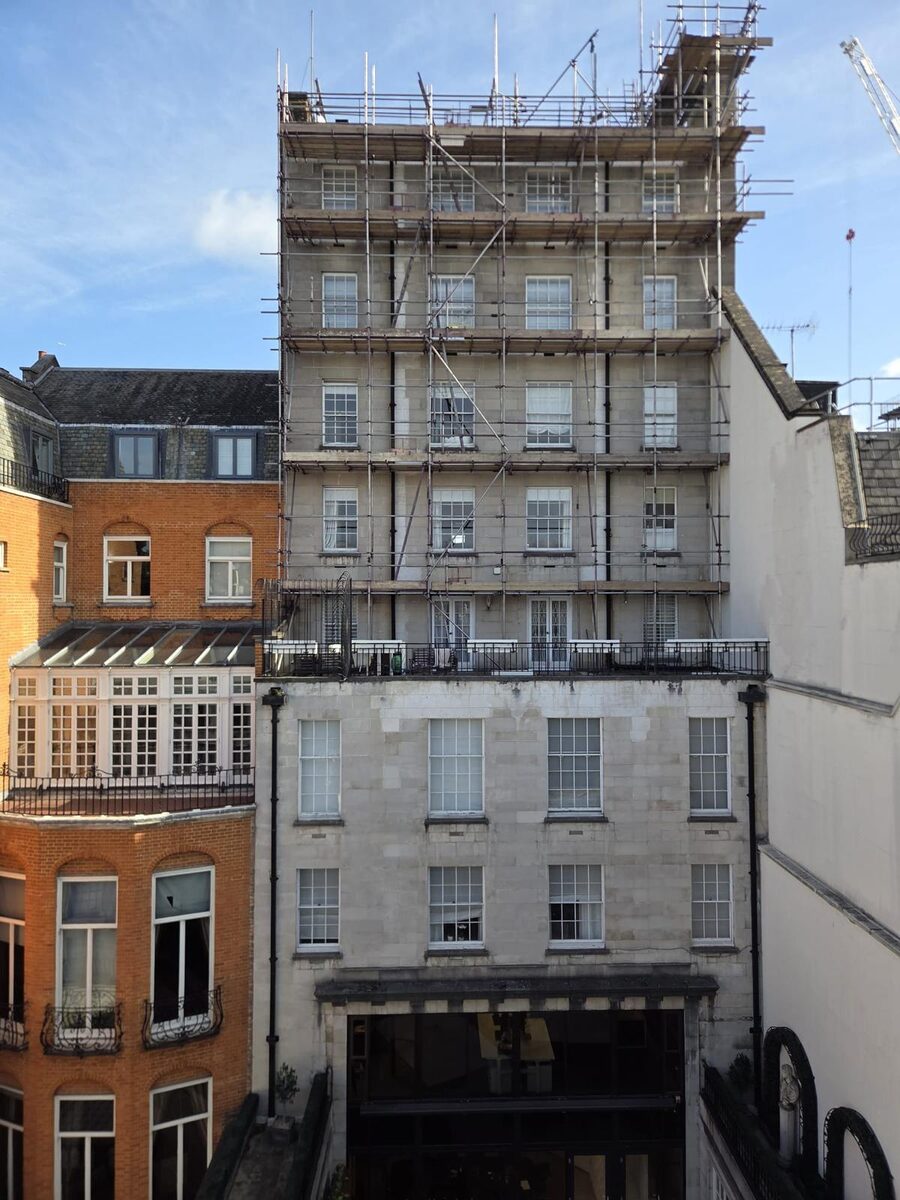
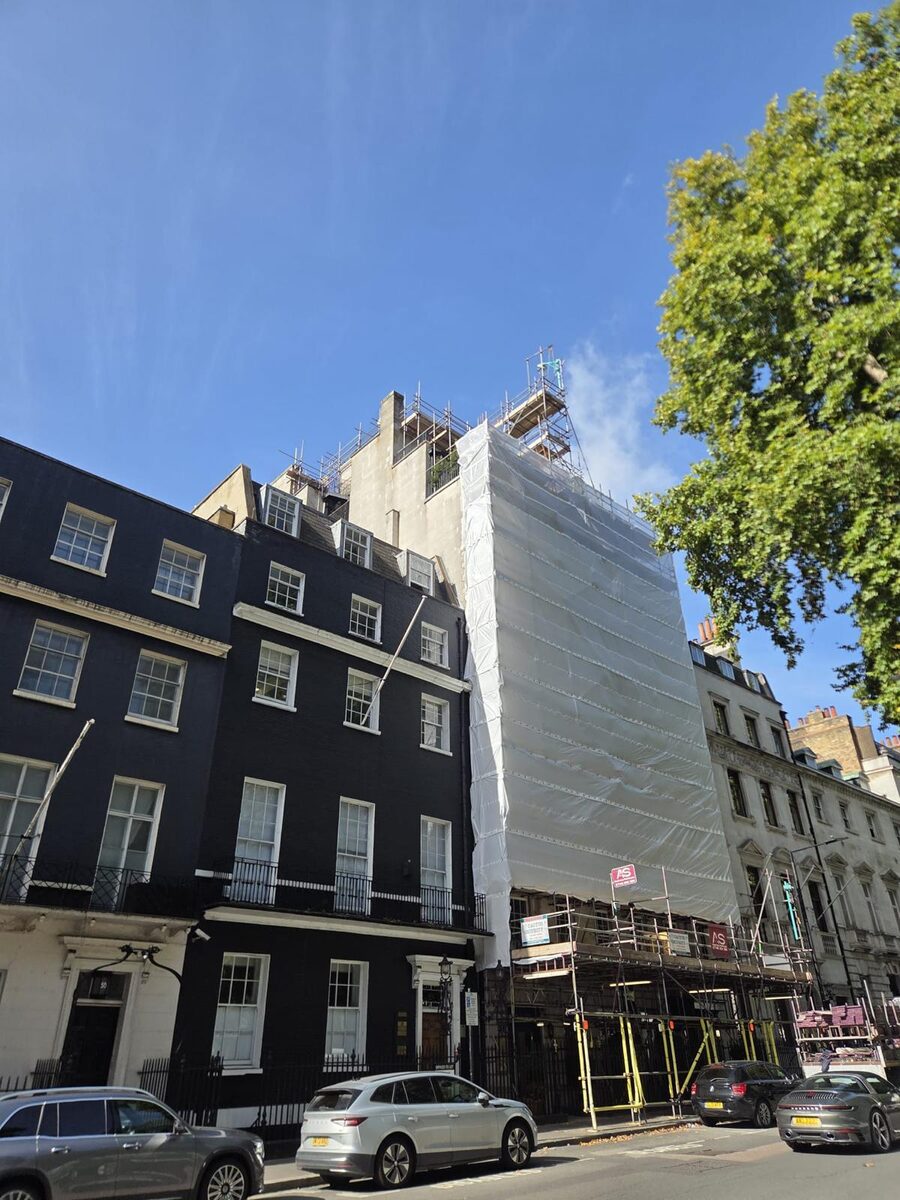
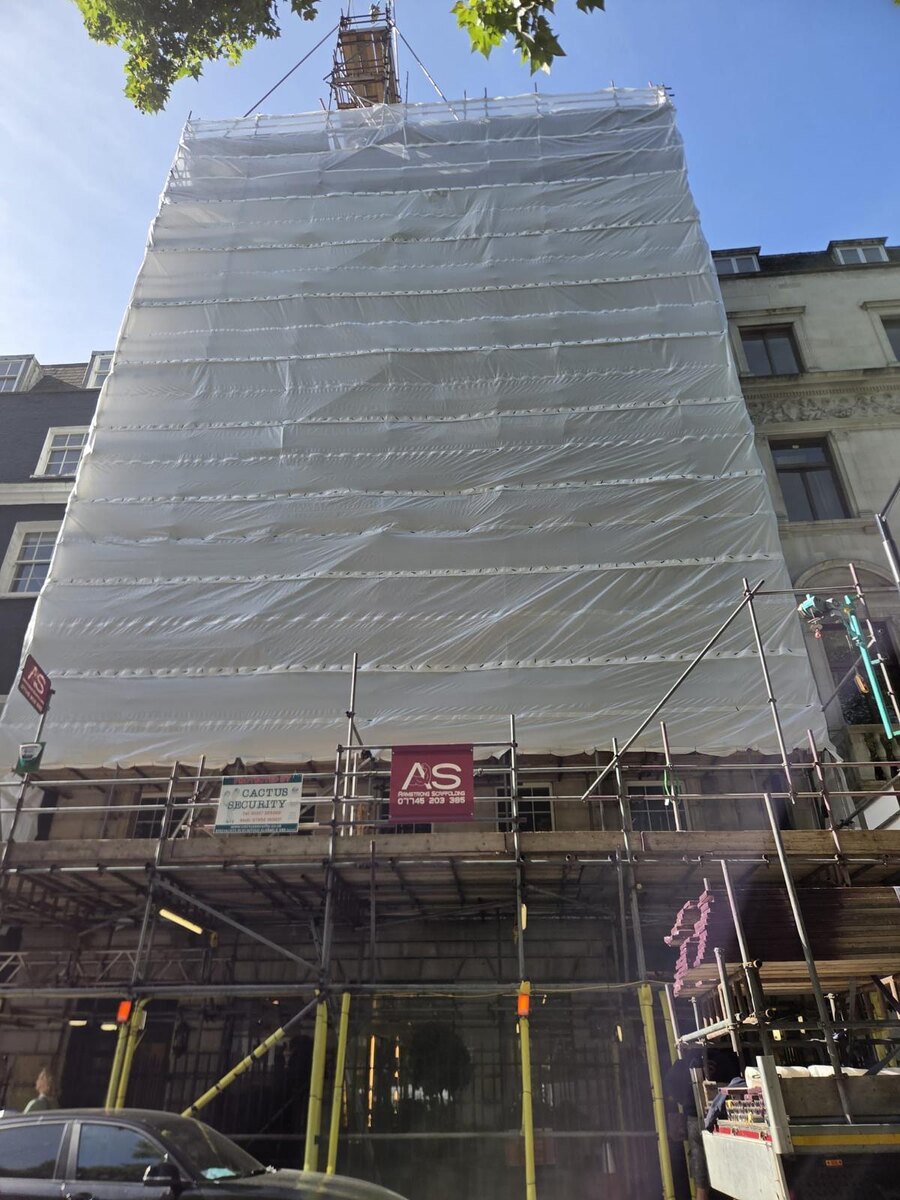
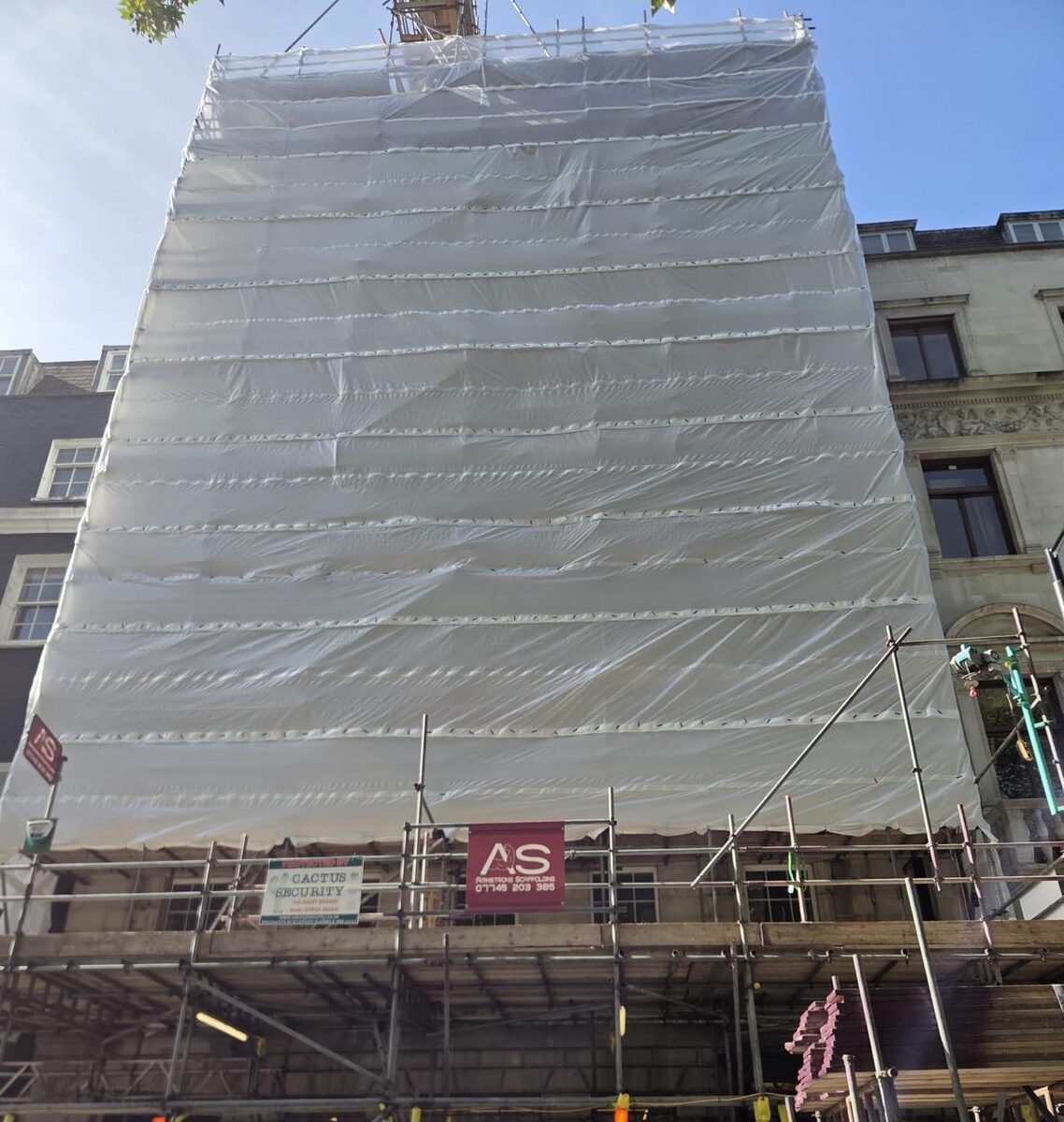
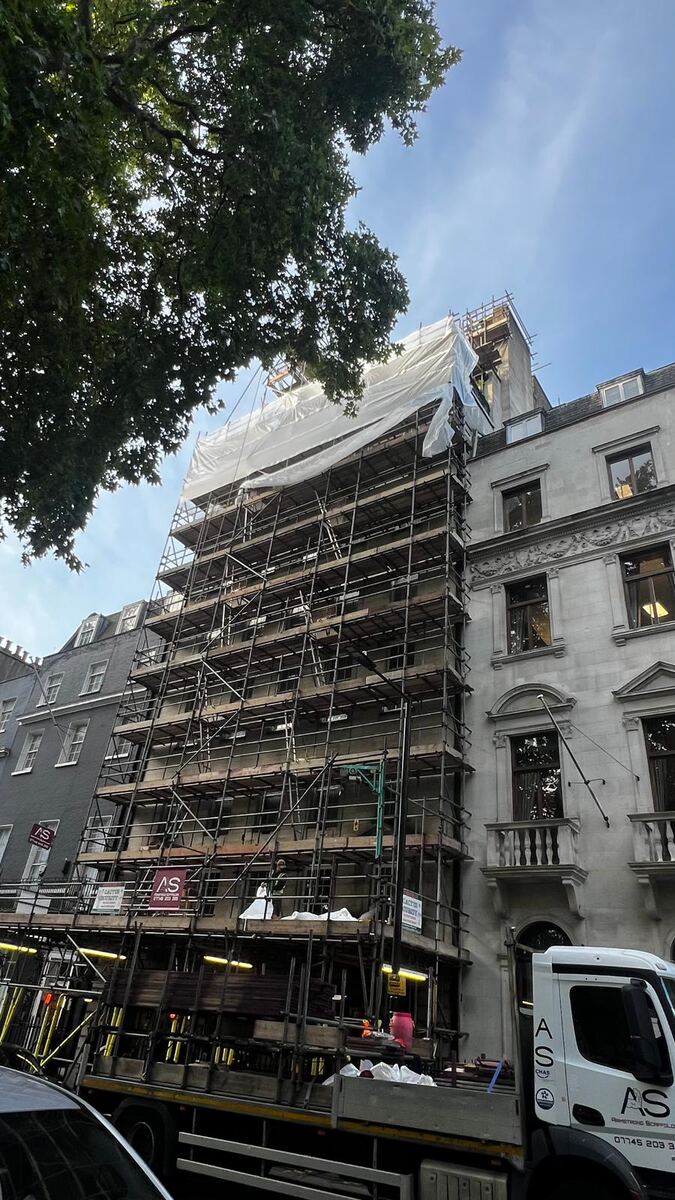
The completed Armstrong Scaffolding structure on Berkeley Square, shrink wrapped across the full elevation from the boarded pedestrian gantry to above the roofline
The finished structure, sealed across the full elevation from the gantry to above the roofline.

What We Built

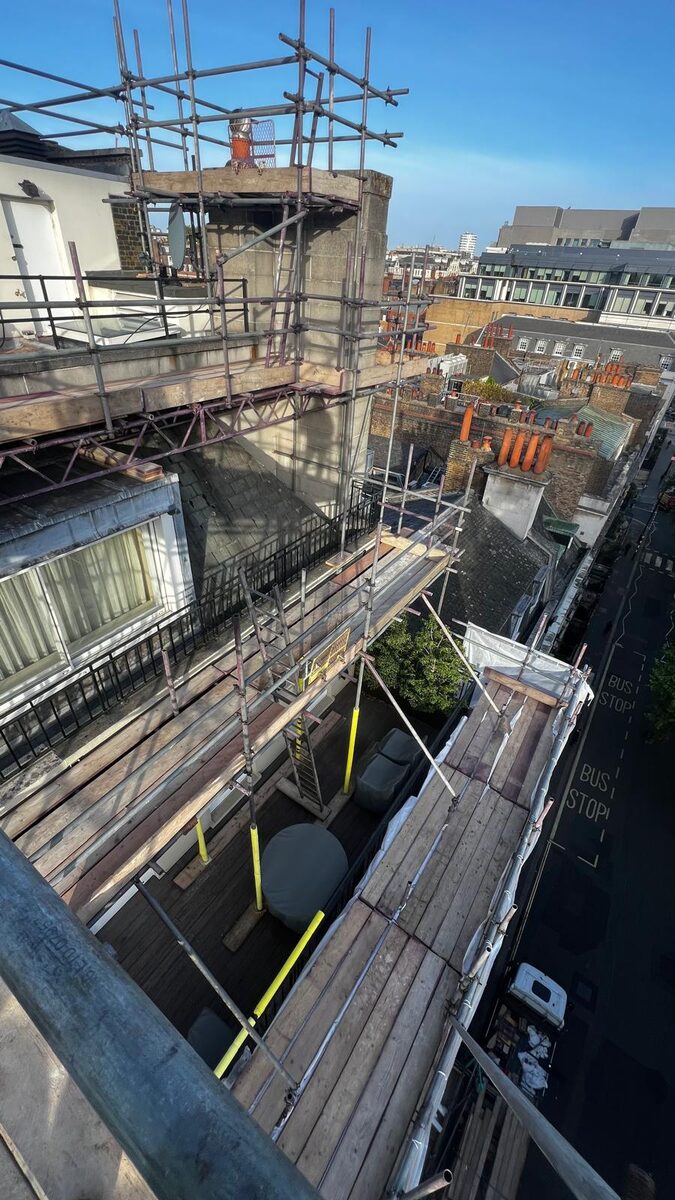
A full access scaffold to a period terrace on Berkeley Square, for a building refurbishment. The front elevation runs the width of the frontage and rises past the roofline, with a boarded working lift at every level the trades need to reach. The rear elevation is scaffolded to the same height.

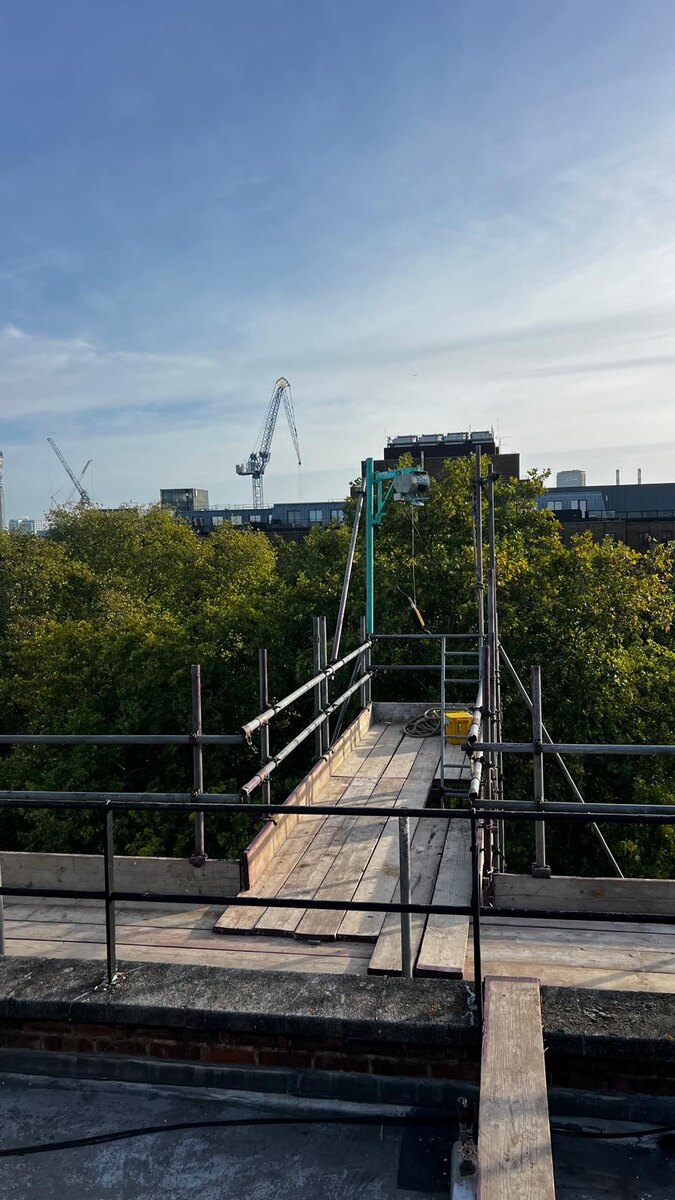
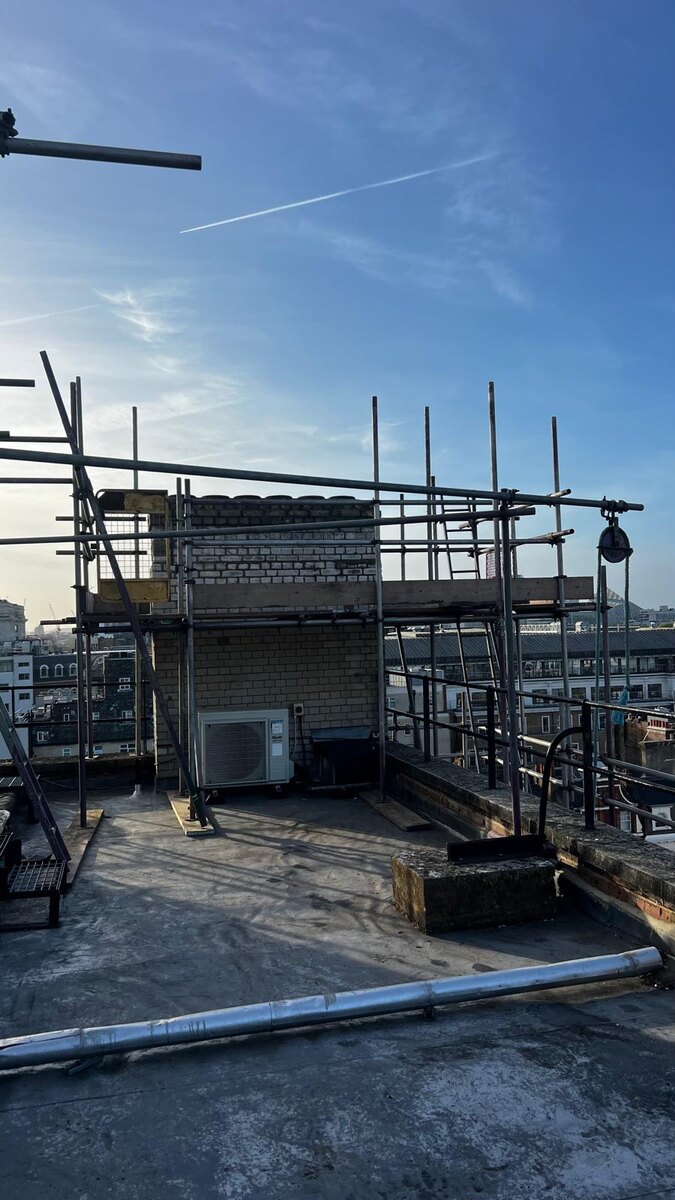
It does not stop at the roof. The structure continues up and over, taking access around the chimney stacks and the rooftop plant, with a boarded bridge running across the roof itself and an electric hoist mounted on it. That hoist is how material reaches roof level on a building with no crane and no room for one.

At street level it sits on a pedestrian gantry. The footway runs underneath it, boarded overhead and open along its length, so people walking the square pass beneath the works rather than stepping into the carriageway.

A Designed Scaffold, Not a Standard One

Most domestic scaffolds are built to TG20:21, the industry compliance guidance that covers common configurations. Work within it and the scaffold is compliant by design.

This one sits outside it. A gantry carrying public footfall, a frontage on a busy Mayfair street, and a structure of this height take the job beyond what the standard configurations cover, which means it needs a bespoke design with calculations signed off by a scaffold design engineer before a single tube goes up.

That is a real distinction and it is worth understanding as a client. A contractor who only builds to TG20:21 either turns this job down or builds something they cannot justify on paper. The design comes first, the drawing goes to the client, and the structure gets built to it.

Working Under the Plane Trees

The square's mature plane trees sit directly over the frontage. The canopy reaches across the top lifts of the scaffold, which changes how the upper levels get built.

Trees like these are protected. You do not cut a route through one to make a scaffold easier to erect, so the structure is set out to work beneath and around the canopy instead, and the crew lift materials up through it rather than swinging them across.

It is slower. It is also the only acceptable way to do it, and getting it wrong on a tree in a central London square is not a mistake you recover from quietly.
Got a job that needs a designed scaffold?

We do the design calculations in house, so we can tell you what is possible before you commit to anything.

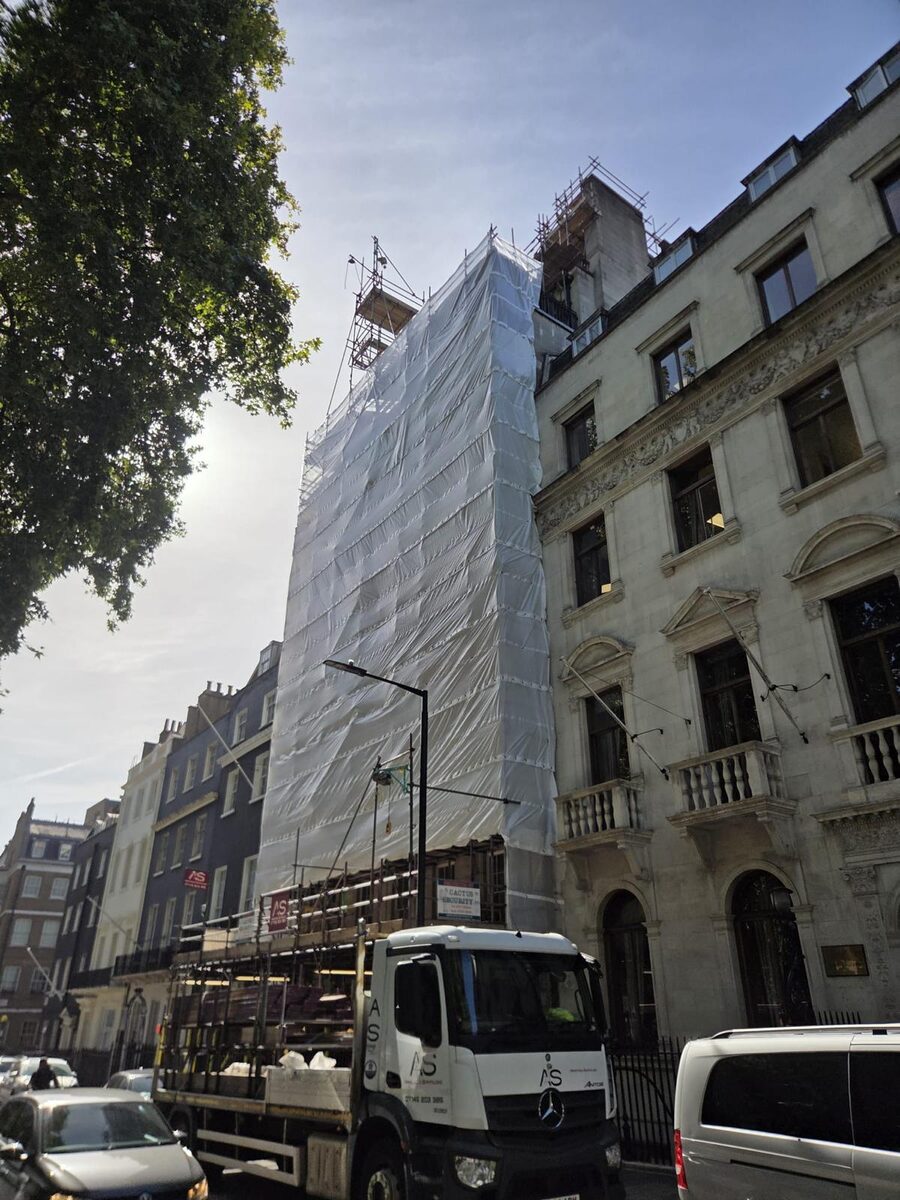
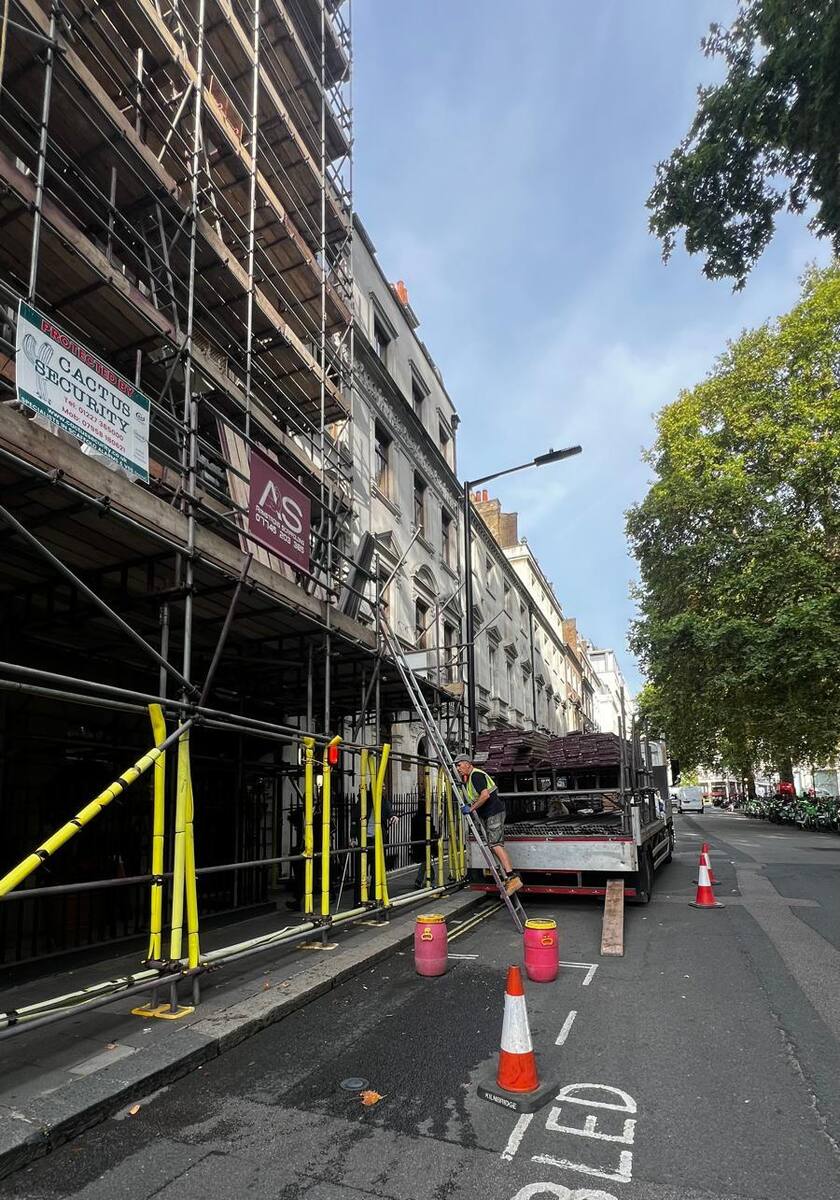
Armstrong Scaffolding crew unloading scaffold boards from a flatbed lorry in the carriageway beside the pedestrian gantry on Berkeley Square, Mayfair
Street Level

The Footway Stayed Open

Berkeley Square is not a street you can close. It is residential and commercial, occupied, and busy on foot all day.

The gantry is what makes that possible. It takes the scaffold load down to the kerb line while leaving a clear boarded route underneath, so pedestrians keep their pavement for the whole duration of the works rather than being pushed out between parked cars and moving traffic.

The uprights standing in the walking route are sheathed in high visibility padding. That is not decoration. A steel tube at head height on a route used by people carrying bags and looking at phones is the most likely thing on the whole site to injure a member of the public, and it is the cheapest to protect against.

Wrapped and Sealed

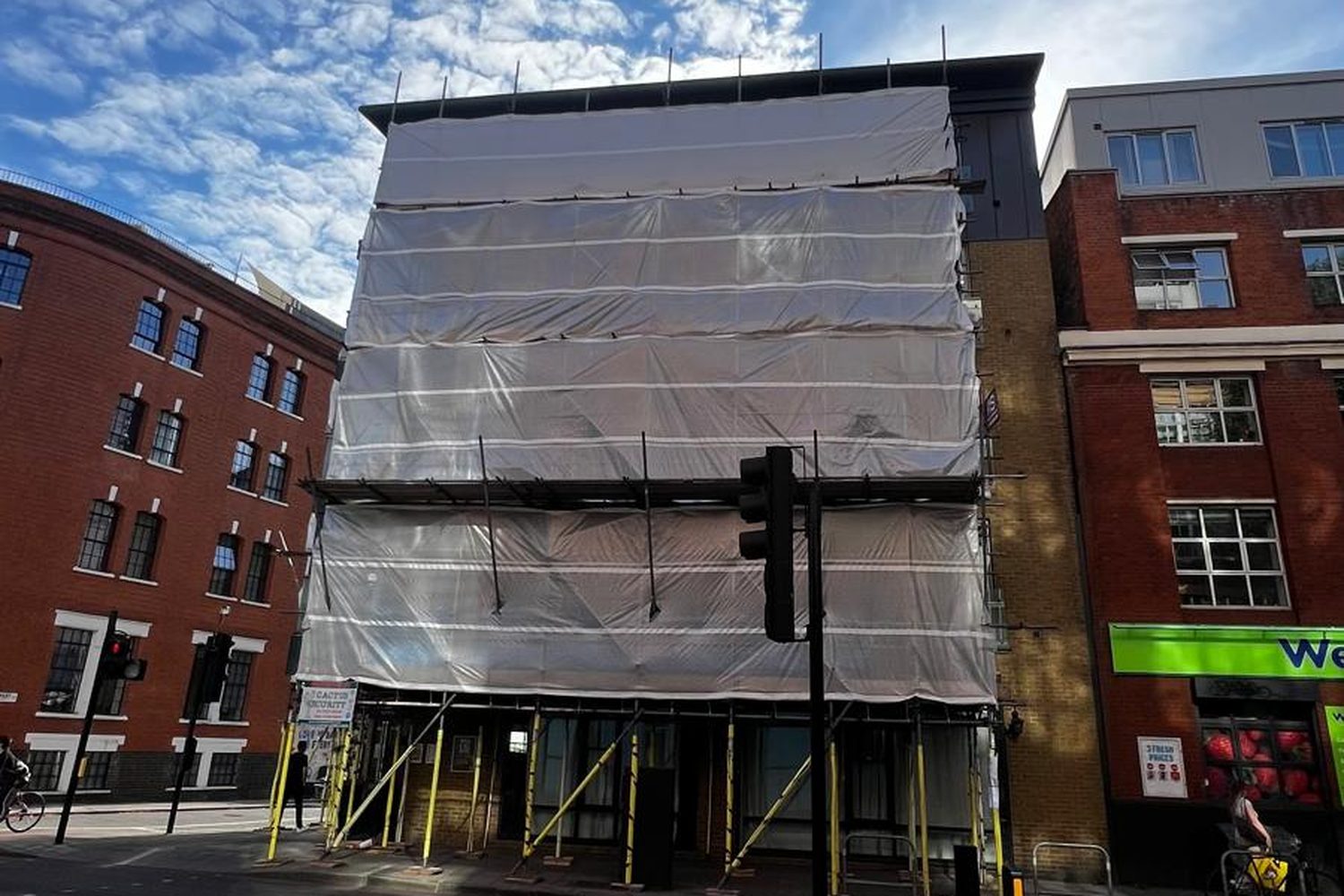
Once the structure was up, the whole of the front elevation was encapsulated. Not debris netting, which slows things down and catches the worst of it, but sheeting welded tight across the full face from the gantry to above the roofline.

On a refurbishment that matters in both directions. It keeps the weather off the building while it is open, so the programme inside does not stop every time it rains. It also keeps the dust, grit and noise of the works inside the scaffold rather than over the square, the neighbouring offices and the cars parked underneath.

On a street like this there is a third reason. A wrapped scaffold looks finished. An open one with netting and debris visible on the lifts looks like a building site for however many months the job runs, in a location where that is noticed.

If you have a building going into refurbishment and the access looks complicated, we can look at the access with you before anyone quotes it.

Central London is the far end of where we travel. Most of our work sits closer to home, across Kent and the South East London boroughs, where we run the same designed structures, pedestrian gantries and commercial scaffolding from our Sevenoaks yard.

Common Questions

Designed Scaffolds and Public Footways

What is a designed scaffold and when do you need one?

A designed scaffold is one that falls outside the standard configurations in TG20:21 and therefore needs bespoke structural calculations from a scaffold design engineer. Common triggers are gantries carrying public footfall, heavy loading, unusual heights, temporary roofs, and anything tying into a structure in a non standard way. If a contractor cannot tell you whether your scaffold is a TG20 compliant design or a bespoke design, that is worth pressing on before you appoint them.

Can a scaffold go up in central London without closing the pavement?

Usually yes, using a pedestrian gantry. The scaffold is founded at the kerb line and a boarded deck spans over the footway, so the public route stays open underneath for the duration of the works. It costs more than standing the scaffold straight on the pavement and it takes longer to erect, which is why it is worth confirming at quote stage rather than assuming it is included.

How do you scaffold around mature trees?

You build around the canopy, not through it. Street and square trees in central London are generally protected, and pruning one to suit a scaffold needs consent from the local authority long before the scaffold is booked. In practice the structure is set out to clear the canopy and materials are lifted vertically rather than swung across, which is slower but avoids both the damage and the enforcement that follows it.

What is the difference between debris netting and shrink wrapping a scaffold?

Netting catches falling material but lets weather, dust and noise straight through. Encapsulation is sheeting heat welded across the whole face, which keeps rain off an opened up building so internal works can continue, and keeps dust and grit inside the scaffold rather than over the street. It costs more and it adds wind loading, which is one of the things a bespoke scaffold design has to account for.

Who issues the licence for a scaffold on a London footway?

The local highway authority for the borough, which for Mayfair is Westminster City Council. Any scaffold standing on a public footway or highway needs a licence before it goes up, and the approval date usually sets the start date rather than the other way round. Ask any contractor quoting whether they are applying and how long they expect it to take.

Got a question we have not answered here?

Tell us about the building and we will tell you what the access needs to be.

Get in Touch

Need a Designed Scaffold?

Bespoke design calculations, pedestrian gantries and work over live footways. Armstrong Scaffolding issues a CAD drawing and a fixed quote before we mobilise, across Kent, London and the South East.

Contact Us for a FREE Quote