
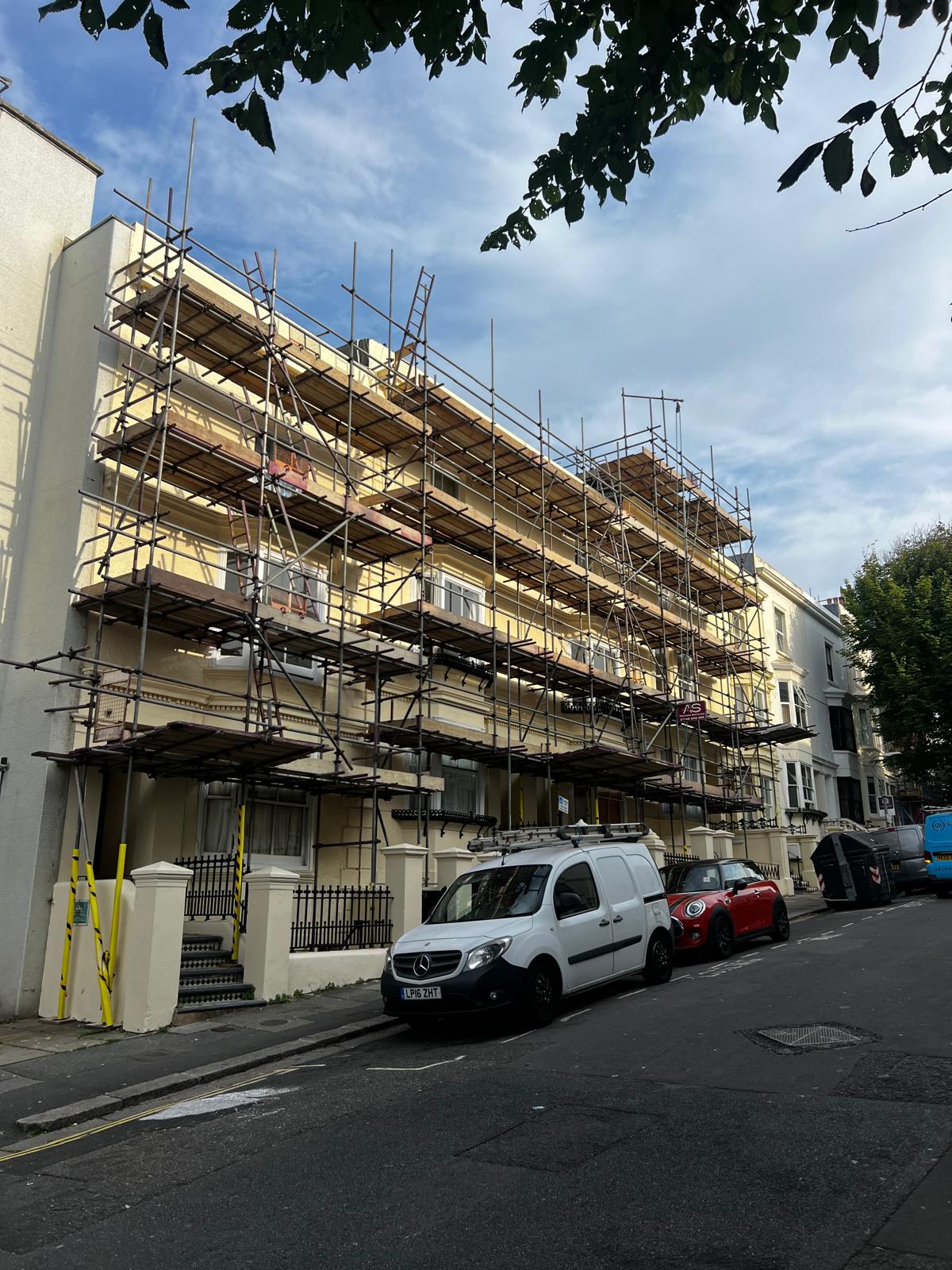
Armstrong Scaffolding covers Royal Tunbridge Wells across TN1, TN2, TN3 and TN4, from the town centre and The Pantiles out to Rusthall, High Brooms, Southborough and Pembury. Two things shape most jobs here: a lot of the older stock is faced in soft Wealden sandstone that will not take loading, and the town sits across a ridge so rear elevations often stand lower than the front. Both are settled at survey and written into a fixed price. Domestic, commercial and industrial scaffold, temporary roofs and roof access.
Soft stone and sloping ground
Tunbridge Wells asks two things of a scaffold that most Kent towns do not. The first is the stone. The town sits on Wealden sandstone and a great deal of the older stock is faced with it, which is softer than brick, marks under pressure and does not forgive a tie driven into the wrong place. On those buildings the answer is a scaffold that stands on its own base and takes its ties from window reveals and openings rather than from the face.
The second is the ground. The town runs along a ridge with valleys either side, so properties around Mount Ephraim, Bishops Down and Broadwater Down frequently sit a full storey lower at the back than they appear from the street. That changes the height of the scaffold and it changes the base, which has to be stepped and packed to the fall rather than simply stood on level plates.
Neither is difficult once it is known about. Both are expensive when they are found on the day the crew arrives, which is why nothing here gets priced over the phone.
Tunbridge Wells at a glance
- Postcodes covered
- TN1, TN2, TN3, TN4
- Council
- Tunbridge Wells Borough
- Highway licences
- Kent County Council
- Conservation areas
- The Pantiles, Calverley Park and others
- Local stone
- Wealden sandstone, softer than brick
- Typical erection time
- 2 to 3 working days
- Accreditations
- CHAS, SafeContractor, SMAS
- Insurance
- £10m public & employee
Domestic scaffolding in Tunbridge Wells
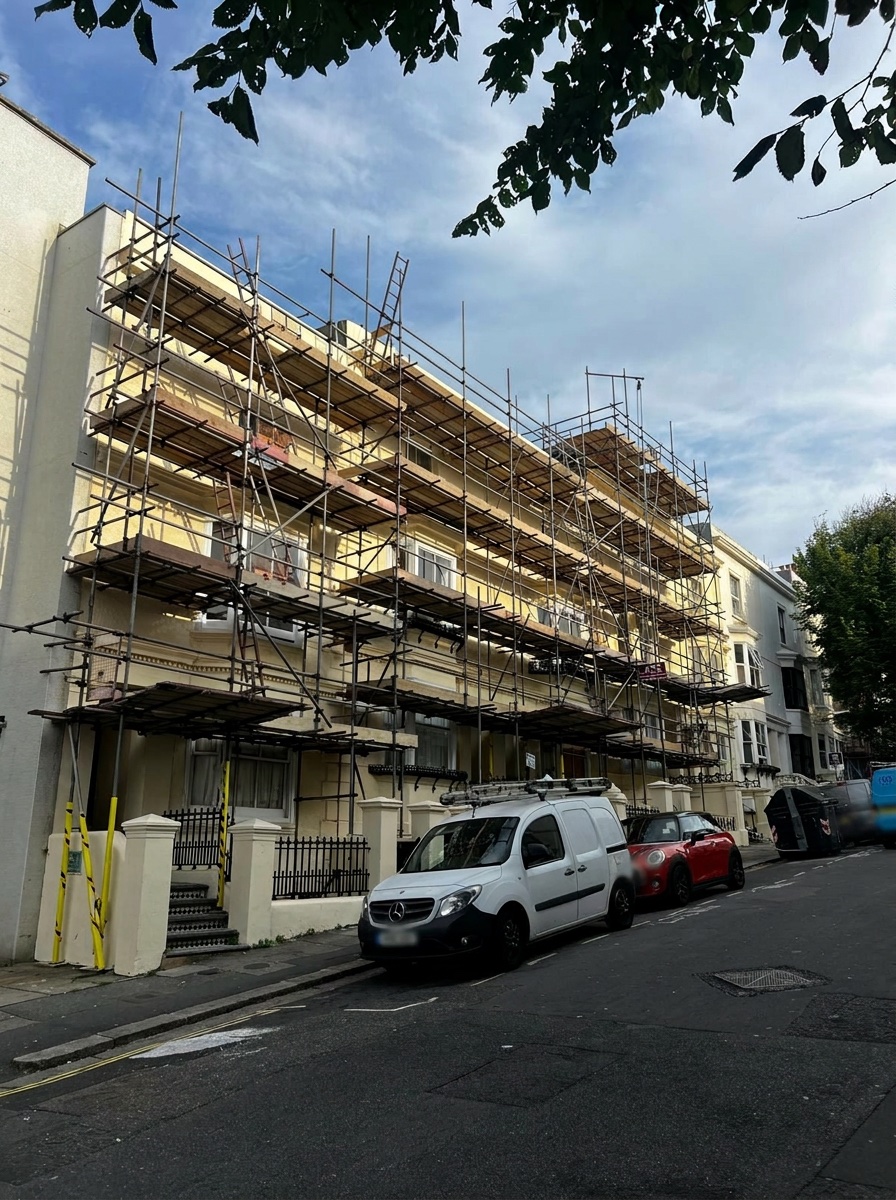
The tall Georgian and Victorian townhouses around Mount Pleasant Road and Upper Grosvenor Road run to four and five floors, which puts the roofline well above what a standard two-lift domestic scaffold reaches. Those need multiple working lifts, a base set out for the pavement width available, and often a licence because there is nowhere else to stand.
Out at Sherwood, High Brooms and the newer developments at Knights Wood and Royal Wells Park it is more ordinary work on more ordinary buildings: roof repairs and re-roofing, loft conversions with a temporary roof to keep the property dry, chimney access, rear extensions and scaffolds for rendering or repainting.
In between sit the conservation areas, where the constraint is paperwork as much as engineering. The Pantiles and Calverley Park both carry restrictions, and a listed facade may need consent for any fixing into the fabric. We design around fixings wherever the building allows it, because a scaffold that needs no consent is quicker to get standing than one that does.
Commercial scaffolding in Tunbridge Wells
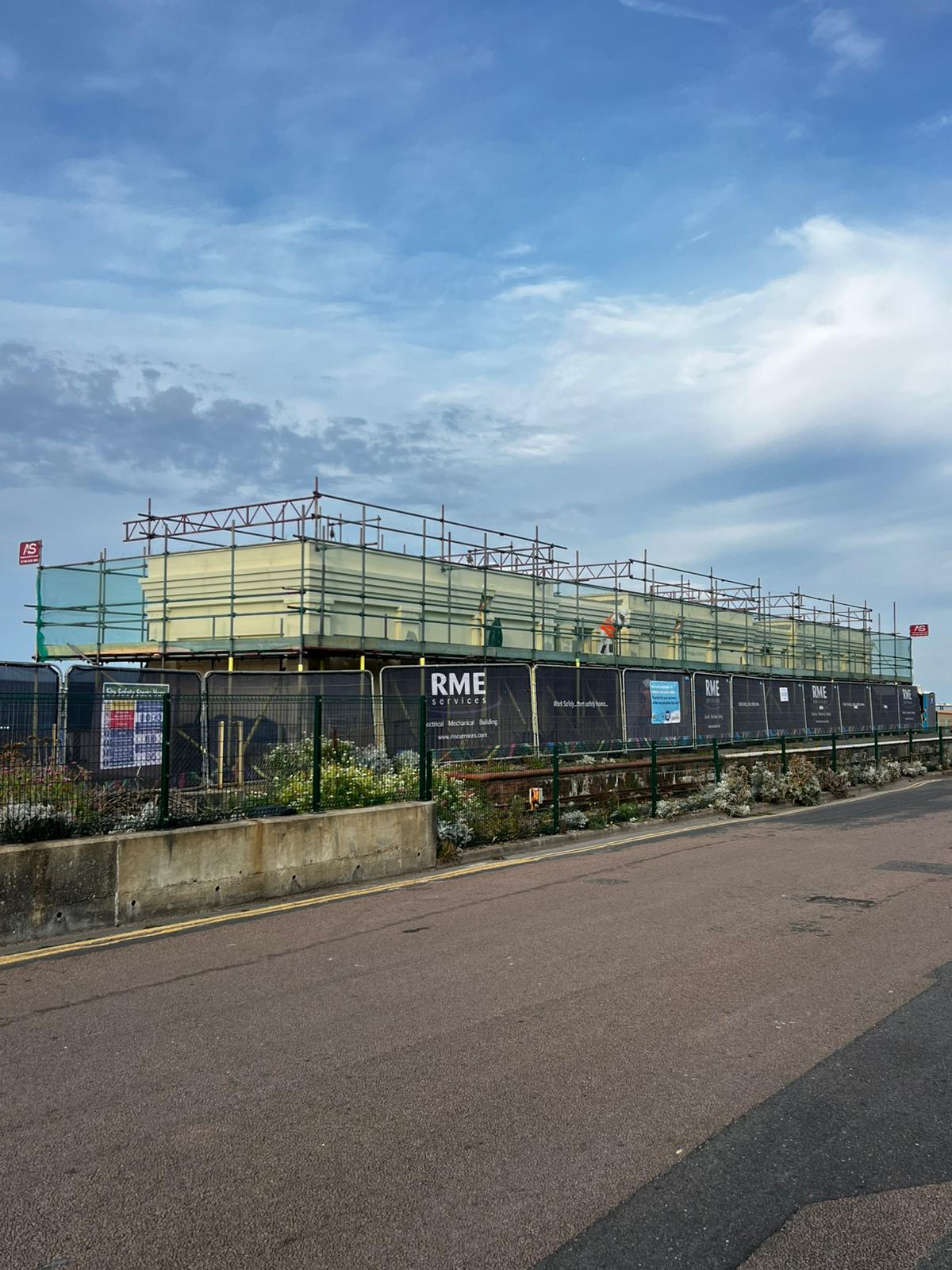
Commercial work here is weighted towards heritage. The Pantiles colonnade, the shopfronts along the High Street and the older frontages through the town centre are mostly period buildings in a conservation area, still trading, on streets that carry pedestrians all day. That combination is what the job is really about: a boarded walkway or gantry so the footway stays open, a highway licence, and a load-in early enough to be finished before the shops are.
The town also carries a lot of professional office space and managed flats, much of it converted from the same period stock. Those buildings are rarely empty, so the scaffold has to be planned around people arriving at eight in the morning: protected entrances, escape routes left clear, and phasing that does not close the only way in. Everything the managing agent needs is issued before the first delivery rather than chased afterwards.
Armstrong has held CHAS, SafeContractor and SMAS accreditation for years, which matters here because heritage and public-facing commercial work tends to be let through agents and managing surveyors who ask for the paperwork before they ask for the price. If you are weighing up scaffolding companies in Tunbridge Wells for a commercial contract, those three are the credentials worth checking on any quote you are given, not only ours.
Industrial scaffolding and longer programmes
Industrial work around Tunbridge Wells concentrates on the estates at North Farm and High Brooms, north of the town towards Southborough. Most of it is envelope work: recladding, getting safely onto a roof or up to plant, replacing rainwater goods, and repairs to the frame itself on units that carry on trading throughout.
Very few of those sites can afford to close, so the erection is normally split elevation by elevation, keeping loading doors and vehicle movements running the whole way through. On anything running past a single trade visit we price the standing time separately from the erection, with the inspection cycle written into the same document, so a programme that slips does not turn into an argument about what was included.
What scaffolding costs in Tunbridge Wells
Two indexes publish figures for this town and they broadly agree. One puts a single two-storey house scaffold at £705 at the low end, £1,060 as a typical figure and £1,650 at the top, held for four to eight weeks. The other gives a general scaffolder rate averaging £745, with the bulk of jobs falling between £465 and £1,205, and hire running higher again.
Those are useful for a sense of scale and useless for your actual job. A more honest way to look at it is what the money is buying, stage by stage.
1. The survey
Free, and it is where the price actually gets decided. Access, gradient, the state of the facade, whether anything has to go over a footpath. Nothing is quoted before this on a period property.
2. Design
Most domestic scaffolds are built to TG20:21 compliance, which needs no separate drawing. Anything outside it, including most work on a listed facade, needs an engineer’s design, and that is a line in the quote rather than a surprise.
3. Erection
The labour and the materials, usually two to three working days for a house. Carrying through a property with no side access adds to this and is the single most common reason two quotes differ.
4. The hire period
Set against the programme rather than a guess, with a margin built in. Past that point a weekly rate applies, and you will have seen it and approved it long before it is charged.
5. Striking and making good
Taking it down, and putting right whatever the base sat on. A quote that does not mention this is not a complete quote.
On a period or listed property the first two stages carry more weight than they would elsewhere, which is the real reason quotes in this town vary more than they do down the hill in Tonbridge.
Common scaffolding questions in Tunbridge Wells
Heritage and period jobs
Three published projects on the kind of buildings Tunbridge Wells is full of.
Scaffolding near Tunbridge Wells
We cover TN1 to TN4 across the town centre and The Pantiles, St James, Sherwood, High Brooms, Rusthall, Southborough and Pembury, and work outwards from there into the rest of Kent and the Sussex border villages. We are a professional scaffolding company rather than a tower hire outfit, so every job is erected, handed over and inspected by our own crews.
Book a Tunbridge Wells survey
On a period property the survey is the quote. Somebody looks at the stone, the ground and the access, and the figure that follows is the figure you pay.
Our scaffolding services in Tunbridge Wells: